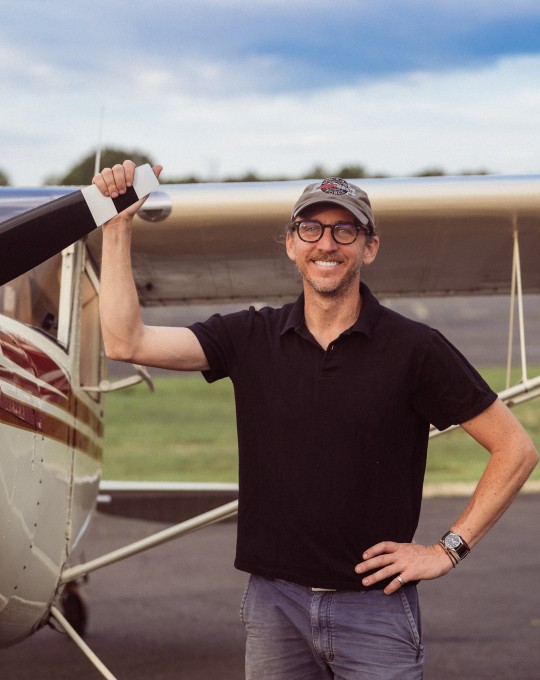
My aviation story starts where a lot of them do — in the back seat of someone else's airplane. My father was a flight simulation engineer at Wright-Patterson AFB and a private pilot, so some of my earliest memories are of bumping around Ohio skies in Pipers and Cessnas from the base aero club. My mother was a teacher — a fact that, in retrospect, probably explains as much about how I ended up instructing as my father's flying does. The hook was set before I was old enough to know what to do with it.
I've been flying since 2009, and somewhere along the way it stopped being something I do and became something I am.
I hold Commercial certificates in airplane, seaplane, and glider, CFI certificates in both airplanes and gliders, and an Advanced Ground Instructor certificate. I'm also instrument rated. But credentials only tell part of the story. What those ratings really reflect is a genuine obsession with becoming a better pilot — the seaplane rating because water landings demand total presence; the glider certificates because nothing sharpens your energy management and stick-and-rudder feel like an aircraft with no engine to bail you out.
More than half of my 1,000-plus hours have been logged in tailwheel aircraft — and that's not an accident. There's something about conventional gear that demands your full attention from the moment the wheels start rolling. But the experience that has shaped my tailwheel instruction more than anything else is towing gliders. As a tow pilot in both the Aviat Husky and the Piper Pawnee, I've made hundreds of takeoffs and landings in conditions that would humble a lot of airplanes — thermal days with swirling surface winds, gusty afternoons on a grass strip, tight patterns with a glider on the rope. Towing is unforgiving on technique and rewards precision over brute force. That repetition, in real conditions, is what I draw on when I teach.
The RV-4 sitting in my hangar is another piece of that story. I'm not teaching Van's transitions from something I read about — I fly one regularly. I understand the systems, the quirks, the things the manual doesn't quite prepare you for. If you're transitioning into an RV, that matters.
At Three Point Aero Services, I teach in your aircraft. That means you build experience and confidence in the exact machine you own and will fly solo. No fleet scheduling, no unfamiliar avionics — just focused, thoughtful instruction in your airplane.
Whether you're working toward your Private or Commercial certificate, earning a tailwheel endorsement, transitioning into a new RV, or just need a flight review to stay current — my approach is simple: flying should be safe first, and fun second. Those two things reinforce each other. The sky will always find new ways to humble even the most experienced pilot, and settling for minimum proficiency isn't something I encourage in myself or in my students.